Learning Electricity Through Hands-On Experimentation at GHS Maharatha
eVidyaloka|August 2026
eVidyaloka|August 2026
Science becomes more meaningful when students can move beyond textbooks and experience concepts for themselves. At GHS Maharatha, a Grade 8 science session turned a lesson on Electricity and Electric Circuits into an engaging hands-on learning experience, helping students understand a complex concept through observation and experimentation.
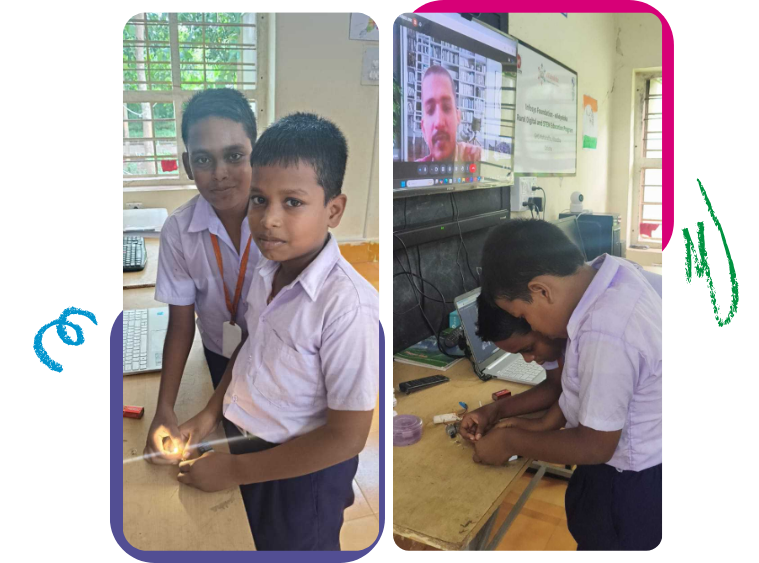
During the session, VT Harihar Panigrahi introduced students to the basic components of an electric circuit using a battery, bulb, and connecting wires. Rather than simply learning how a circuit works, students actively participated in assembling one themselves. As they connected the components and observed the bulb glow, they discovered an important principle: firsthand the bulb lights up only when the circuit is complete.
The experiment encouraged students to observe, question, and learn by doing. As they assembled the circuit, they identified its basic components and discovered how electric current flows through a complete path. Watching the bulb light up when the circuit was completed helped them connect the concept from their textbook to something they could see and experience firsthand.
At eVidyaloka, such hands-on learning experiences complement digital classroom sessions by making lessons more interactive and meaningful. With the guidance of dedicated Volunteer Teachers, students get opportunities to explore concepts, participate actively, and build a deeper understanding of what they learn. At GHS Maharatha, a simple electric circuit became a moment of discovery sparking curiosity and showing students how science works beyond the pages of a textbook.

Explore how quality education empowers children to break barriers and reach their full potential.
Discuss innovative teaching methods and approaches used by education NGOs to foster a love for learning.
Shed light on the dedicated educators, staff, and volunteers who drive the NGO's educational initiatives.
